MTONI - Brand Story
MTONI is a promising brand that draws its radiance and presence from the enduring legacy of Omani history on the island of Zanzibar, dating back to 1829, when Sayyid Said bin Sultan built Bait El Mtoni Palace. From this palace emerged a far-sighted vision that established a new and distinctive way of life and ushered in a flourishing era in which prosperity, luxury, love, peace, joy, and harmony were shared by all.
The inspiration drawn from that joyful and gracious life continues to guide us today. It echoes through palace halls and royal gardens, along the corridors of the ancient Stone Town, and across the romantic Zanzibari countryside framed by white shores and refreshing tropical climates. This spirit is alive with the warmth, joy, and kindness of its welcoming people.
For this reason, we carry today a noble mission and an elevated message. We seek to recount the details of those beautiful and joyful stories that unfolded in these lands, particularly after Zanzibar became the capital of the Omani Empire, stretching from the shores of the Arabian Gulf to the Comoros Archipelago. It rose as a global port and a primary destination for merchant ships arriving from Oman, Persia, India, England, France, Germany, America, and many other nations, all drawn by trade, exchange, settlement, and the pursuit of a prosperous and gracious life.
BAIT EL MTONI
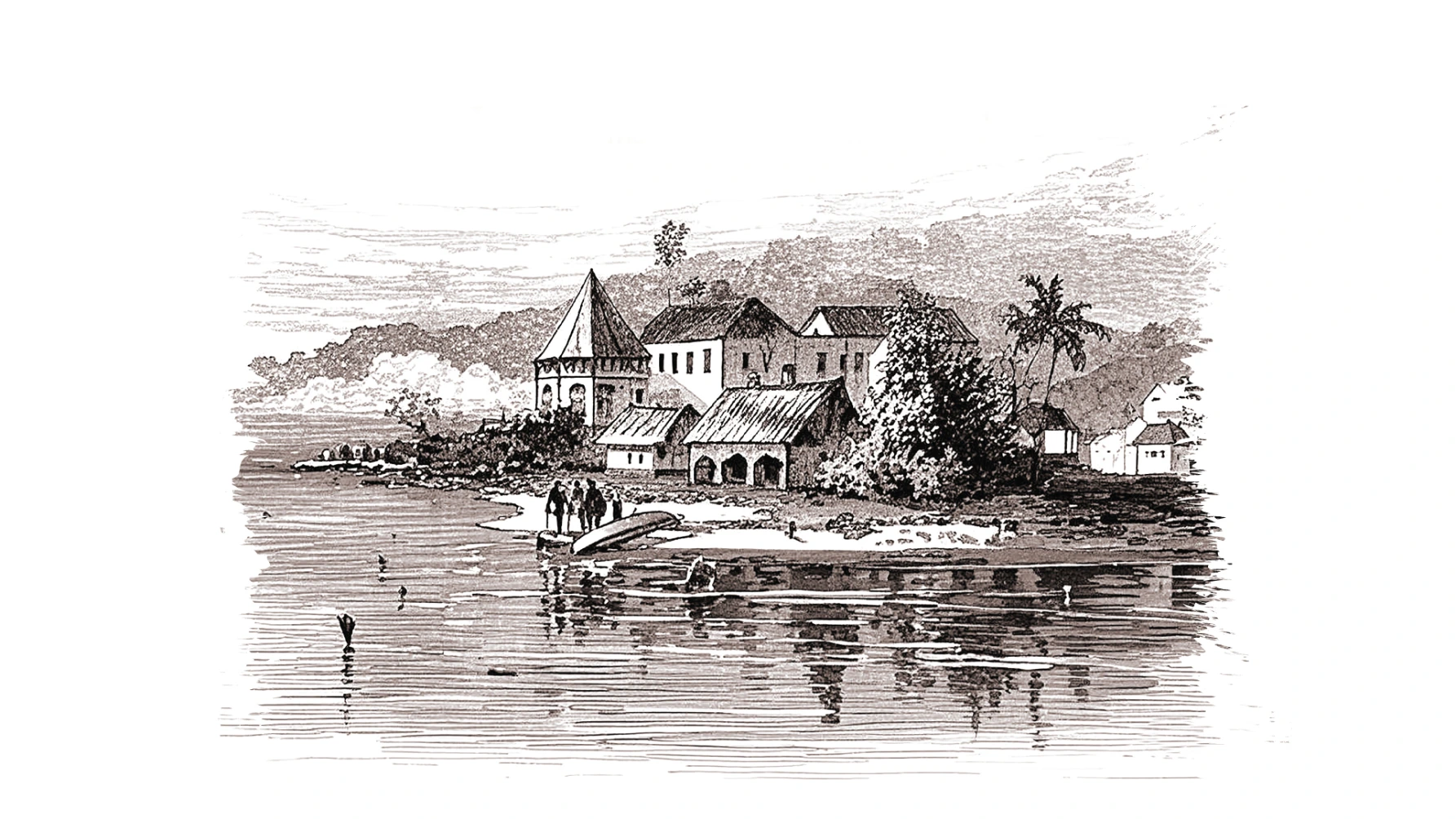
Bait El Mtoni was the first palace built in Zanzibar in 1829 for Sayyid Said bin Sultan, ruler of Oman and Zanzibar. In her memoirs, Princess Salme bint Said bin Sultan described the palace as occupying a distinctive location amid a vast landscape of coconut palms, mango trees, and towering tropical plants. A small river flowed through the structure and emptied just beyond its walls into the beautiful channel of sea that separates the island from the African mainland.
The palace was home to nearly one thousand residents, all living under a refined yet strict system that governed the details of daily life for every individual. Peacocks, gazelles, waterfowl, cranes, geese, ducks, and ostriches roamed freely through the palace courtyard. They were surrounded by young and elder princes and an immense royal entourage, receiving constant care and attention within an atmosphere filled with happiness and reassurance.
The most remarkable feature of Bait El Mtoni was the Bangla, located opposite the main residence and overlooking the sea where the royal vessel Al Rahmani remained anchored throughout the year. It was a grand circular veranda resembling a vast rotating wheel, crowned with a tent-shaped wooden roof. This was the place where Sayyid Said bin Sultan would retreat for reflection and contemplation during his days filled with affairs and meetings.
Near this veranda, the Sultan planted the first clove tree brought from Mauritius in 1828. From it, cloves spread across the island of Zanzibar and left a profound impact on economic prosperity and material wealth.